On voice
Voice gets tossed around a lot in the writerly world. There are a million definitions out there. They all poke at the gooey notion of the choice of words, tone, syntax, punctuation, and rhythm that the writer uses to tell their story. It’s a hard thing to define, but you know when you hear it. And when it works, it elevates the reader’s experience.
For me, The Dog Stars by Peter Heller is a great example of voice elevating the story. I really liked this book. But the truth is I like post-apocalyptic stories, aviation, and trout fishing. So, odds are I would have liked it almost however he wrote it. But the voice made it special.
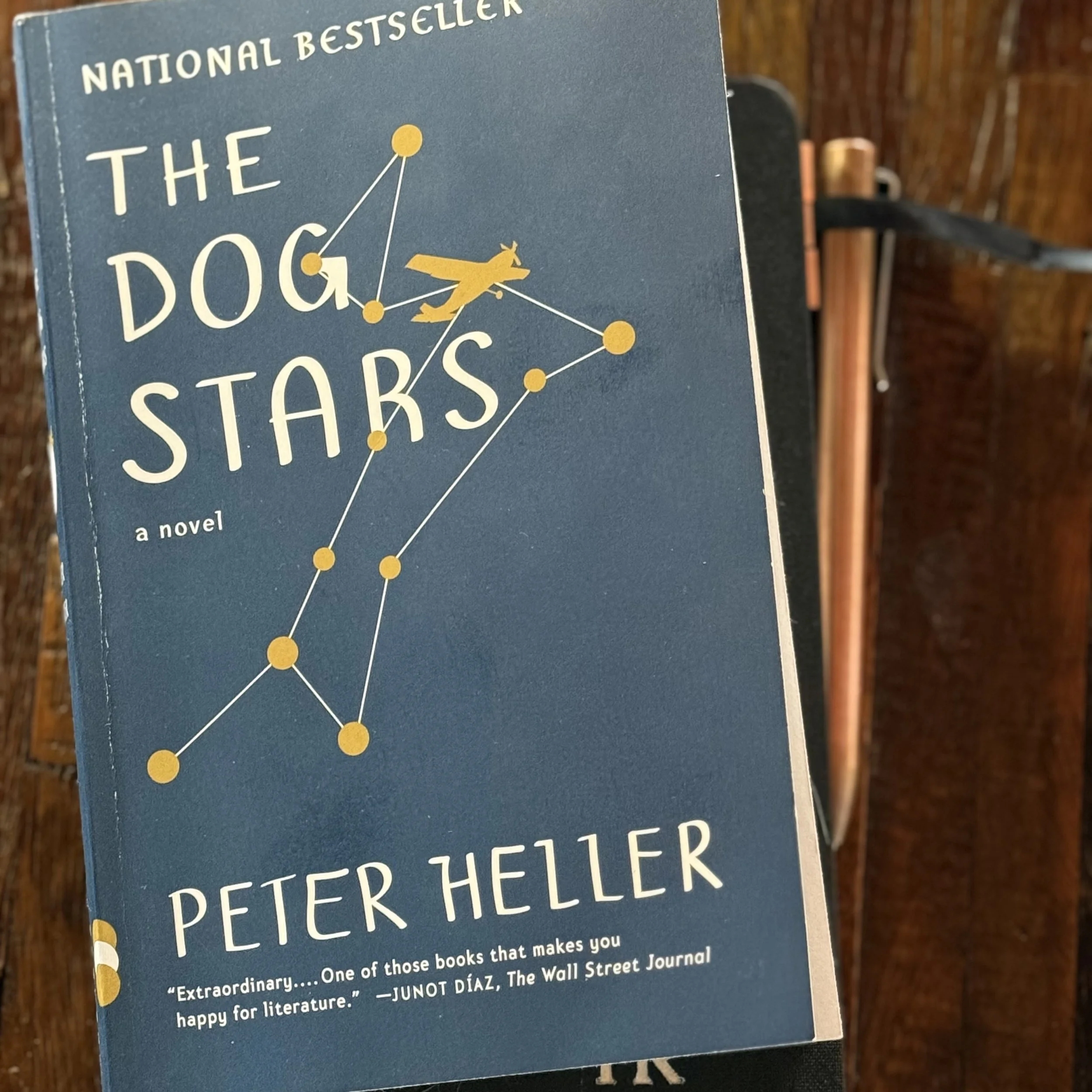
The Dog Stars by Peter Heller
How did he do it? I wish I knew.
Sure, it was unconventional in that he threw grammar out the window. A lot of fragments and run-ons, many two or three-word sentences, and a McCarthy-esque lack of quotation marks.
But that structure, or lack of it, would have flopped without his choice of words. The dude nailed the words.
All I can say is it felt real. It felt like a friend talking to me, telling me his story. You don’t always talk to your friends in complete sentences, do you? I don’t. I mean; I was in the army—we were lucky to string a subject and verb together most of the time. There is an ease between friends. An understanding. A shorthand. In just a few pages of Dog Stars, I felt like Heller was letting me in on his expressive short hand. Wait till you hear this shit, buddy.
The result for me was that it felt authentic. Earned. Not like he was trying to be avant garde or put on Hemingway airs. Quite the opposite. Like the main character was being himself. Sharing. Then, every once in a while, after I was accustomed to the sparse phrasing, tapping my toe to the staccato rhythm, he would lay down a long, expressive sentence that started with a low rumble then landed with a thunderclap.
It evoked feeling.
The thing about a writer’s voice—any writer’s voice—is that each is not for everybody. Just like not everybody is going to be your friend, some voices aren’t going to work for you as the reader. I was curious so went to look at the Amazon reviews of The Dog Stars. I saw what I expected. The folks who didn’t like it really didn’t like it. They hated the sparse, grammar-indifferent, no-quotation-marks experience.
That’s okay. More than okay. I think it’s cool when an author stakes a claim with voice, knowing it won’t work for some readers. You can’t write for everybody.
Writing is putting yourself out there already. Doing it with a distinctive voice means going further. Going beyond story. This is how I write. Come along if it speaks to you.
TR