The Balls to Jump
I used to do a lot of skydiving. When I say a lot, I’m honestly not sure how many jumps I did. But it was over a thousand. It’s been decades. I also went to Airborne School in the Army. I was just a “Five jump chump,” meaning I never jumped again in the military after leaving a sweltering Fort Benning in July of 1989. But that and my time in the Army were enough to drill into me the differences in the two ways to fall out of an aircraft and to give me a perspective on the two cultures. I’ll never forget a Sergeant Major explaining to me, in creatively profane terms, how little respect he had for however many skydives I had. And while skydivers respect the elite tactical nature of airborne operations, it’s not always viewed as a “skill” per se. As one Jedi skydiver said to me, “I mean, dude… there are units with airborne-qualified dogs.” (Note: Talking military static line here, not HALO. That’s a different beast.)
My first book was traditionally published about ten years ago. Since then, I’ve put out five more as an indie. I’m nearing the publication of the fourth novel in my sci-fi series. Every time I get to this point in the process (final edits with launch just weeks away. Neurotically going back and forth over the same parts of the book) I can’t help thinking about the differences between the Indie and Trad paths and how much both remind me of falling out of aircraft.
My theory is that for the author, Trad is to Indie as military jumping is to skydiving.
Hang with me for a minute.
There are not many rules in skydiving. I mean, there are few. Like gravity. A handful of FAA regulations, etc. And anyone can do it. You would be shocked at some of the mouthbreathers that show up at a civilian drop zone. But, you know, they had money to pay for lessons. Suit ‘em up.
And how you do it is totally up to you. And, holy hell, there are so many ways to do it—relative work, freestyle, wing flying, etc. More, I’m sure, since I’ve been gone a while. And that is just the falling part. There are endless pursuits once you have a good canopy over your head—get to the ground and get back to manifest to jump again as soon as you can, test your accuracy, swoop across the grass at almost 100 mph, CRW, etc. The range of equipment is also dizzying—square canopies, semi elliptical, fully elliptical, RW suits, freefly suits, zero porosity fabric, composite, and good old nylon. Then there’s all the other stuff. You gonna wear a helmet? What color you gonna get? What kind of altimeter? How about gloves? You quickly realize you can wear whatever you want. The color, material, everything is up to you. Nothing like skydiving in shorts and Tevas for this old guy. And yeah, you can jump naked. (Beware the shrinkage. It’s cold up there.)
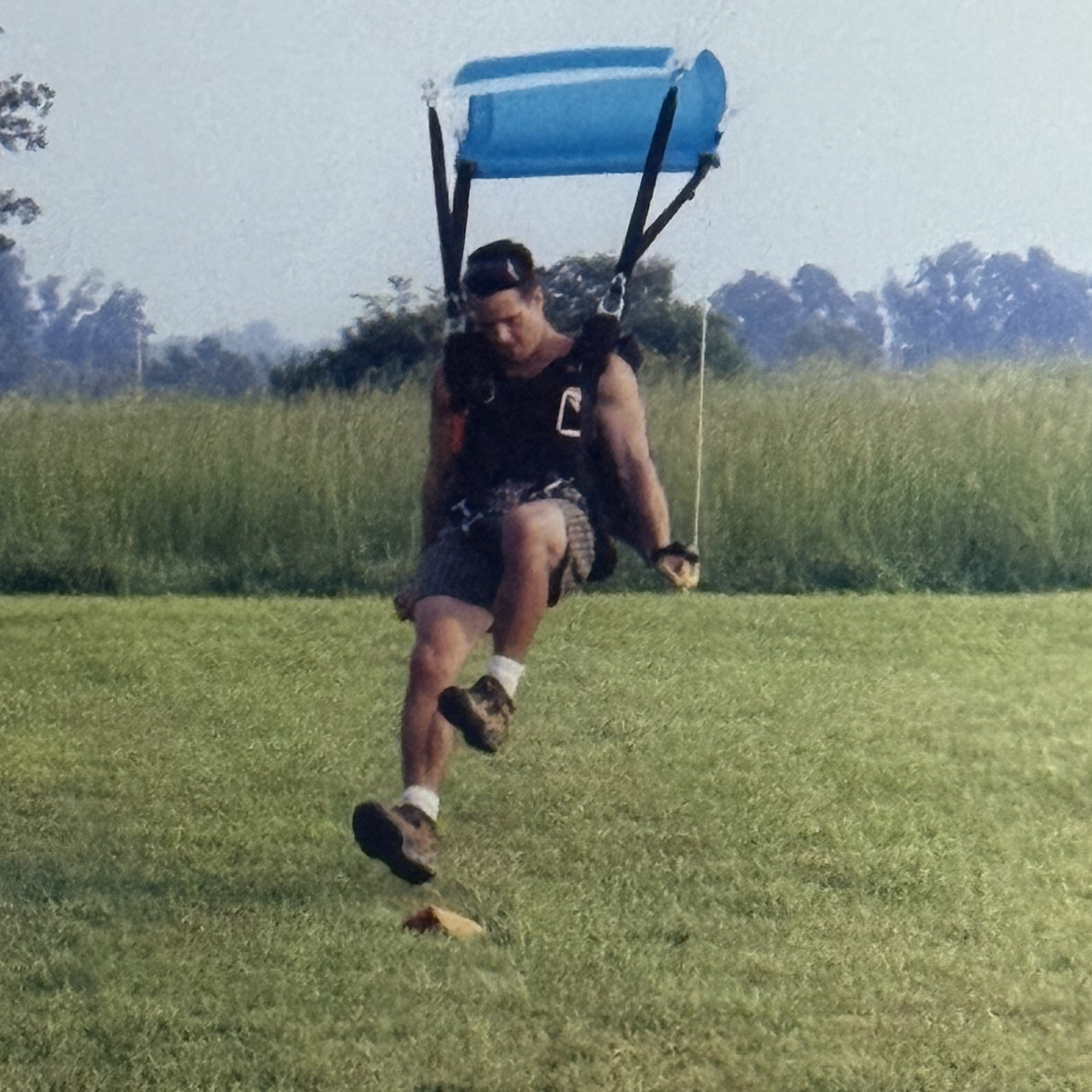
the author post air bath
But the deal is it’s all up to you because, ultimately, it’s all on you. The personal responsibility aspect is something I’m not sure the uninitiated always get. As a skydiver, you pack your own parachute, pick your own exit spot, decide when to deploy your parachute, how to navigate back to the drop zone, when to flare, how to—okay, you get the picture. It’s all on you.
If you fuck up and get hurt, no one cares. I mean, people care, but it’s not like they’re going to stop drop zone operations. (Are you crazy? The weather is perfect). If you do something ridicule-worthy, it sticks. You will never live it down. Ever. All these repercussions you bear alone.
I am sure you see where I am going with this.
Man, does being an Indie author feel the same. Not only do you have to write it. You gotta find an editor. Someone to do the cover and interior. You gonna do a hardback, too? You gotta market it. You gotta pick a distribution strategy. KU? Gonna go wide? You got a plan? Everything about the book, EVERYTHING, is on you. You outsource it, or figure out how to do it yourself (less time to write). The cool thing is that every molecule of that book is a reflection of you. But you gotta figure out how to do all that and not go splat. Friends help.
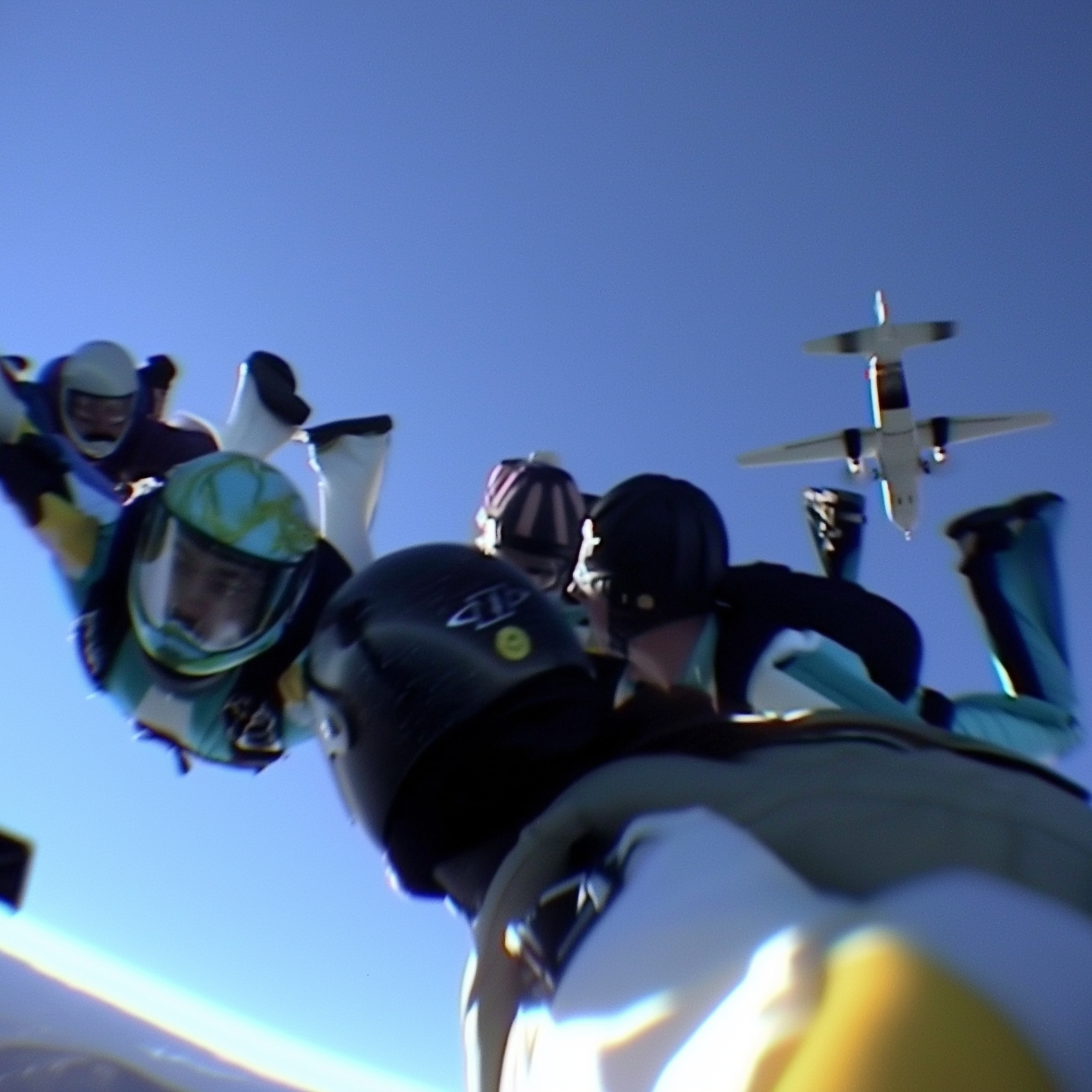
the author with friends
It’s different in Trad publishing.
In traditional publishing you’ve got people supporting you. An agent, editor, maybe a marketing person, a communications department, maybe more… it depends on how big your publisher is. Please understand, I am NOT saying it’s easier. It’s just different. And, truthfully, “supporting you” is, well, kinda bullshit. Those people don’t work for you. They are not “on your team” any more than the NCO inspecting your rig before a jump is “on your team.” It’s their job. They are there to hopefully keep you from going splat.
The way Trad publishers try to keep you from going splat is through process.
And the first part of that process is selection. Same as it is for Airborne School. All the process and training in the world will not keep an out of shape knucklehead from bouncing. So in the military they have physical and medical standards, and the unit’s mission must justify it. (Think 82nd, Ranger Regiments, SF, etc.) In general, the soldiers that go to Airborne School are not slouches.
Same with Trad writers, I think.
Getting through that selection gate as a Trad author drops you into the publishing process proper. Developmental editing, copyediting, proofreading, cover design, interior layout, marketing, publicity, etc. All that same stuff the Indie is running around doing on their own, the publisher does via a process—just like the army cycles hundreds of soldiers through a hangar, onto an aircraft, into the air, and onto the ground safely with a hundred pounds of gear through a trusted, time-tested process.
By the way, don’t worry about picking your equipment. It will be issued. That’s part of the process also, as are most of the decisions.
And it is a serial process. No skipping steps. No deviations. It is slow. I remember sitting against the wall, legs numb from the harness SGT Airborne had just over-tightened during pre-jump inspections, drenched in sweat, heart sinking as I realized we didn’t even get on the aircraft for another ninety minutes. I also remember talking to my publisher about publication dates after signing. Eighteen. Months. Away.
But I’ll tell you this—I miss having the support when it is time to publish. I miss it now. A set of eyes with expertise and judgement honed through time-on-planet to save me from fucking up. Someone to say, “Relax, Ted. I have seen this before. You’re ready.” It’s easy as an Indie to look across the hangar with envy at the perceived army of support our Trad contemporaries enjoy.
But the thing that I think Indies don’t always appreciate is that the Trad pub author is carrying a load Indies don’t. They’ve got a bigger picture job to do, much like the military jumper. And it is not just “have fun and get your story out there.” All that “support” we talked about? The Trad published author has gotta pay those bills, give their publisher a return on their investment of all that time and money. As an Indie, if no one likes your book and you burn in, it’s your time and money. I’m not going to say it’s easier, but it’s different. You can slink away, lick your wounds, and try again. As a Trad author, your performance has an impact beyond you. It’s known. Studied. Fretted over. Depended upon. It’s tattooed on your forehead and follows you around from then on.
There are similarities between Trad and Indie, too.
Important ones.
Just like both flavors of jumper have to know emergency procedures—how to read the wind, when to flare, how to talk to aircrew—the Indie and Trad author both have to hustle to sell their book. Doesn’t matter what kind of author you are. Books do not sell themselves. Okay, some do. But those are lightning in a bottle. You can’t plan on it. And publishers aren’t great at it. So, you gotta hustle, in whatever way works for you and you can stand. Face to face? Social media? Ads? Drive around with them in your trunk? Whatever works. (Seriously, if anyone knows what works, help a guy out and shoot me a note).
Or maybe you just wanted to do it once, say something or tell a story, and see what all the fuss was about… then move on to your next thing in life. Cool.
And there are a few core qualities that make Indie and Trad authors ultimately the same—the grit and commitment required to write a book, and the courage to put it out there. Both paths are like jumping out of a fucking airplane.
Not everyone can do it, and you may go splat.
But do it anyway.
Friends help.
Okay… Thanks for letting me flog that metaphor…. back to that manuscript…