Three Flavors of Apocalypse
With everything going on in the world at the moment, it’s tough to get through the day without confronting numerous references to the coming apocalypse. There are a couple of flavors on the menu—AI, nuclear (two choices here, you looking for Ukrainian or Middle Eastern? We can do either or both for you), climate, pollinator, pandemic, etc.
The word apocalypse didn’t always mean disaster or cataclysm. Originally, in Ancient Greece, it meant an uncovering or revelation. In fact, the book of Revelation was first titled Apokalypsis in Greek. After a few centuries of association with that book’s end times vibe, the word evolved into what it is today. The end of the world.
This weekend I closed the book I was reading and realized I had just finished my third apocalyptic novel in a row. Is that weird? I mean, I don’t think I am a glutton for apocalypse. It’s in the air, right?
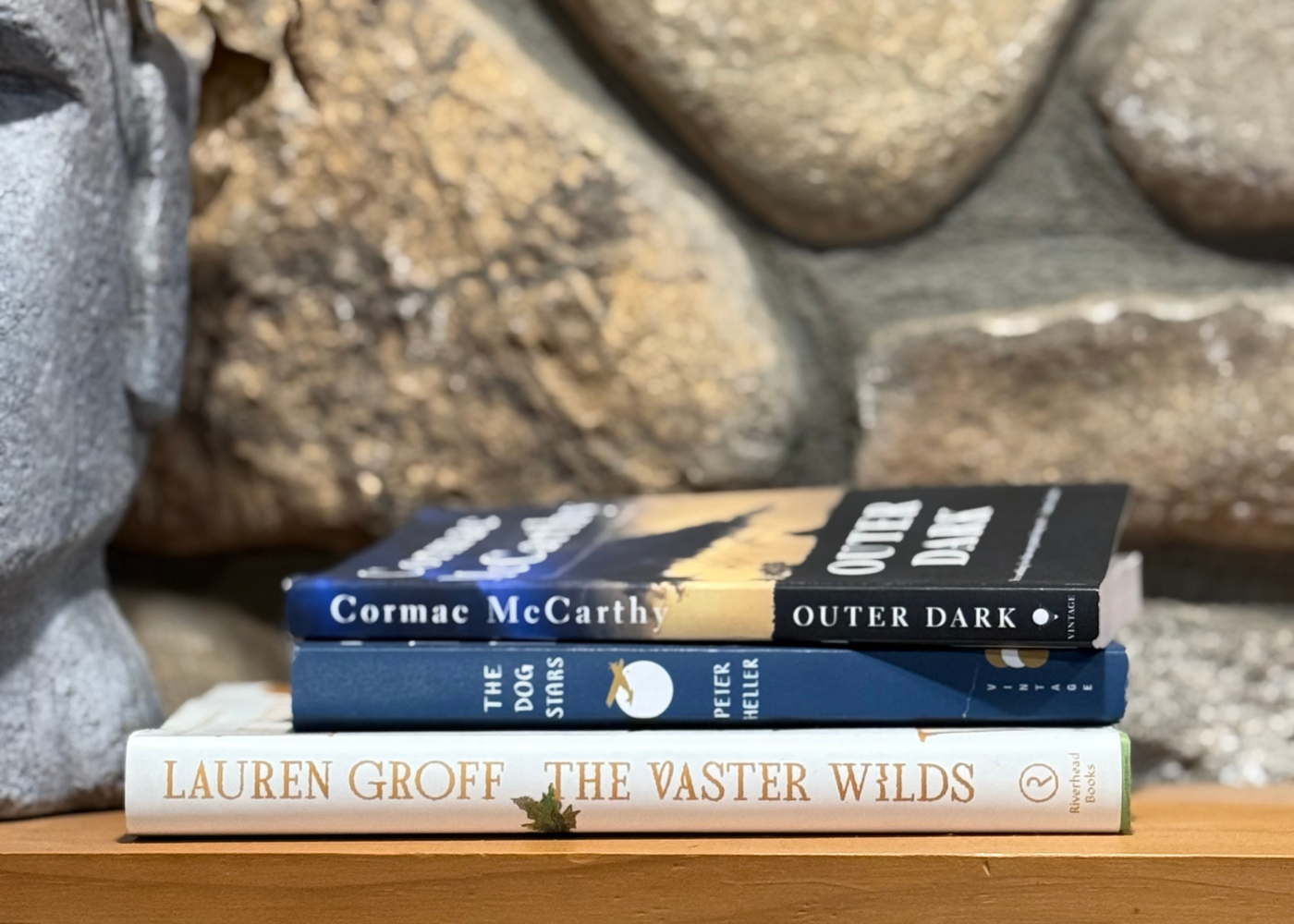
The three books were The Vaster Wilds, by Lauren Groff, The Dog Stars, by Peter Heller, and Outer Dark by Cormac McCarthy. They are all beautifully written with distinctive voices (and no quotation marks) and provoke an interesting three-way conversation about the human spirit, the things one must do to survive—good and bad, and man’s potential for connection, kindness, and depravity.
Groff sets her story during the “starving time” of the Jamestown colony in the winter of 1609. Written in third-person, the narrator’s voice seems of that time. Lofty. Hymnal. Detailed and not in a hurry with some big, old words I had to read twice or look up. The protagonist is a young girl, maybe 17, on the run in the wilderness. She is alone, facing winter, wildlife, Indians, mad revenants, and the things she had to do to escape the colony. Groff doesn’t spare the reader—you are there for every step, depravation, injury, excretion, and sickness. About halfway through, I was in awe of the fleeing girl and judged myself weak in comparison. How did she keep going?
McCarthy’s novel takes place in early 1900s Appalachia. The Southern Gothic tale was one of his earlier books (written in 1968) and the third-person narrator speaks with his trademark voice. Descriptive. Sometimes terse and plain. Sometimes expansive and lurid. Dialog that feels both authentic and haunted. If you’ve read his stuff before, you get more of it here. The main characters, a brother and sister, are harder to root for than Groff’s. The book begins with the woman bearing her brother’s baby. As she recovers, he sneaks away and leaves it in the woods to die, but tells his sister it died of natural causes. The lie is discovered, and her quest to find the baby plays out through the rest of the story. The siblings are separated, and their solitary travels on foot through the haunting, unforgiving landscape are unsettling. The conclusion is dark.
Heller’s book is told in first person by the main character, Hig. Set in a non-specific near future after a super flu devastates the world. His voice is the least adorned of the three. But no less striking. I would say Hemingwayesque, but it’s such an overused description these days—Oops… I said it. In the beginning, Hig is going through the motions of survival with his dog, Jasper, and reluctant partner, a prepper named Bangley. Hig is a pilot. He picks up a mysterious radio transmission in his beat-up Cessna, and events conspire to push him out of habitual survival mode to see what might be out there.
If you like to sink into the language of a book, you’ll find deep water in all three of these novels.
They also have similar things to say. It’s tough to do here without spoilers, so let me just say this—one protagonist finds wandering and suffering, one finds peace, and one something new and hopeful. Despite their wildly different settings and fates, they feel like a band of comrades. Each exhibits perseverance. Each has blood on their hands. And each still elicits empathy and admiration. They kept going somehow. The net effect for me was that, despite the sense that they each get what they earned, their stories are told in a way that empathy overrides judgement. Faced with similar choices and circumstances, I’m not sure I could have done any better.
Depending on the flavor of revelation you’re after, you can’t go wrong with any of these books.
TR